
/ 01
Modern
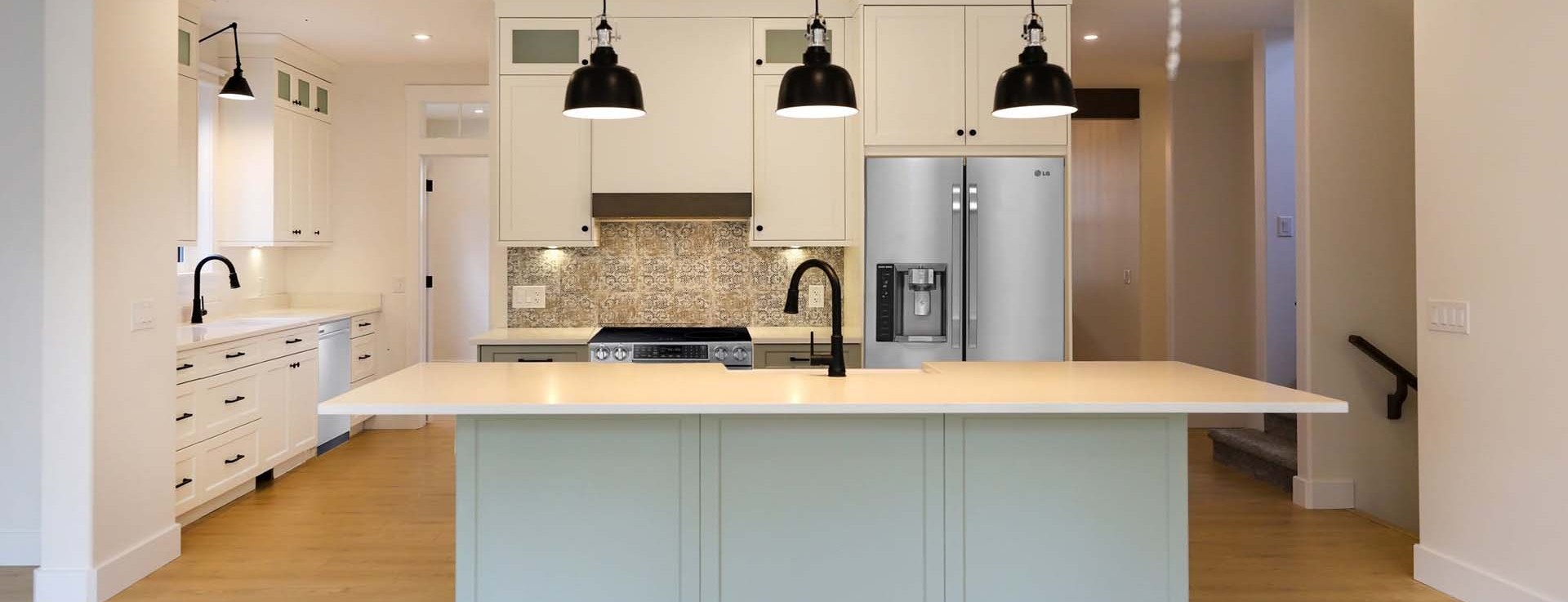
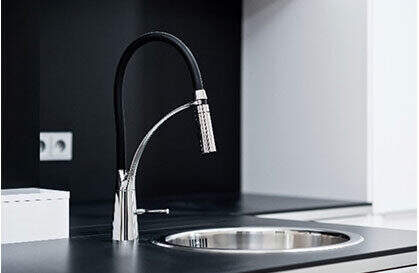
Clean lines, slim gooseneck spouts, and single-handle control. Often finished in matte black, chrome, or brushed nickel.
A guide to choosing the right faucet style, mounting type, and finish for your kitchen, plus what to expect during professional installation.
 Choosing Wisely
Your kitchen faucet is one of the most-used fixtures in the house. The right one fits how you cook, matches the look of your kitchen, and installs cleanly with your sink and countertop.
From modern pull-downs to traditional bridge faucets, the style you choose shapes both the feel of the room and how you work at the sink. Installation varies by mounting type and hole count, so it pays to plan the pair together.
Popular Styles
These are the most common kitchen faucet styles, each with a distinct look and practical purpose.
Clean lines, slim gooseneck spouts, and single-handle control. Often finished in matte black, chrome, or brushed nickel.
Two handles, curved spouts, and detailed escutcheons. A classic choice for timeless or formal kitchens.
A blend of modern and traditional with softer lines and flexible finishes that suit almost any kitchen.
Spring-neck, bridge, and pot-filler styles that stand up to heavy use and make a strong visual statement.
Mounting & Installation
The right mounting type depends on your sink, countertop, and the look you want. Here is what each involves.
 Single-Hole
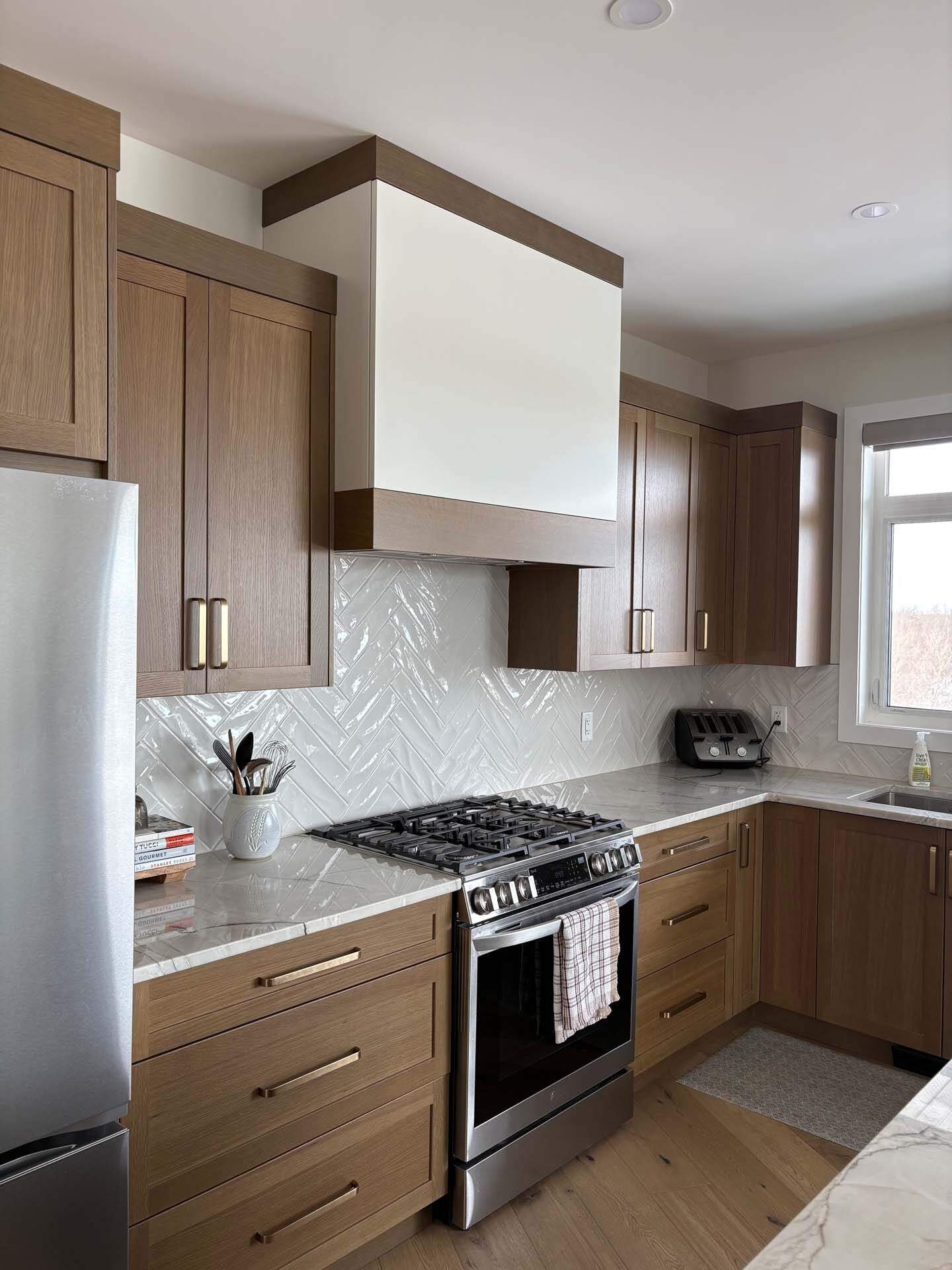
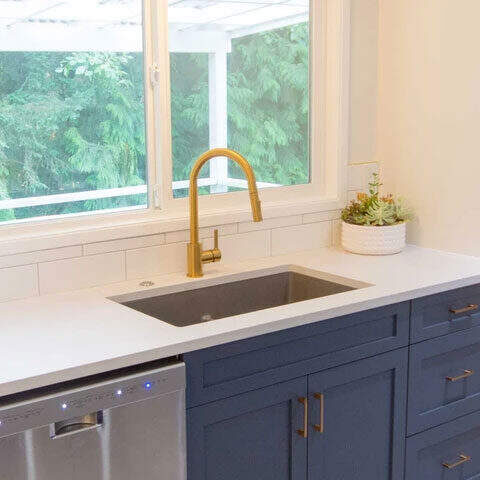
Single-hole faucets mount through one opening in the sink or counter. They are compact, easy to clean around, and work with most modern sinks. A cover plate can hide extra holes if you are replacing an older three-hole faucet.
 Widespread & Centerset
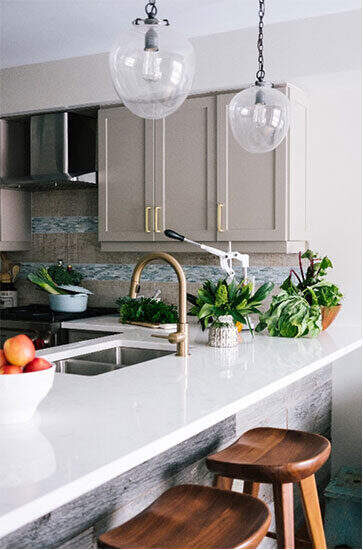
Centerset faucets combine the spout and handles on a shared base, using three holes spaced four inches apart. Widespread faucets have separate hot and cold handles, usually eight to sixteen inches apart, for a more custom look.
 Pull-Down & Pull-Out
Pull-down faucets have a spray head that pulls straight down into the sink. Pull-out heads move toward you, which can be easier in shallow sinks. Both require enough clearance behind the spout for the hose to retract smoothly.
 Wall Mount
Wall-mount faucets install above the sink rather than on the deck. They create a clean countertop and pair beautifully with apron-front and vessel sinks. Plumbing must run inside the wall, so this is best planned during a renovation.
Finishes

 Common Questions
The most common styles are modern, traditional, transitional, and farmhouse or industrial. Each has a different spout shape, handle arrangement, and overall feel.
Most deck-mount faucets install from above through holes in the sink or countertop, with supply lines connected beneath. Wall-mount faucets require plumbing inside the wall and are usually handled during a renovation.
Yes, if the hole count and spacing match. Single-hole faucets can often cover extra holes with an escutcheon plate, but three-hole faucets cannot fit a single-hole sink.
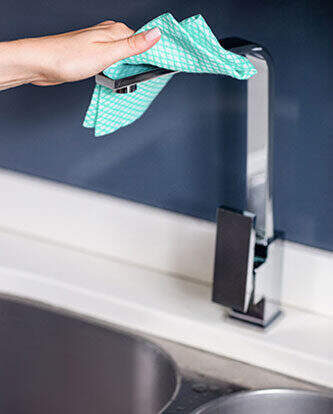
Single-handle pull-down models with fewer seams and touchless activation tend to stay cleaner. Polished finishes show water spots more than brushed or matte finishes.
A simple replacement on a matching sink can be a DIY project. For wall mounts, new countertops, or plumbing changes, professional installation is the safer choice.